

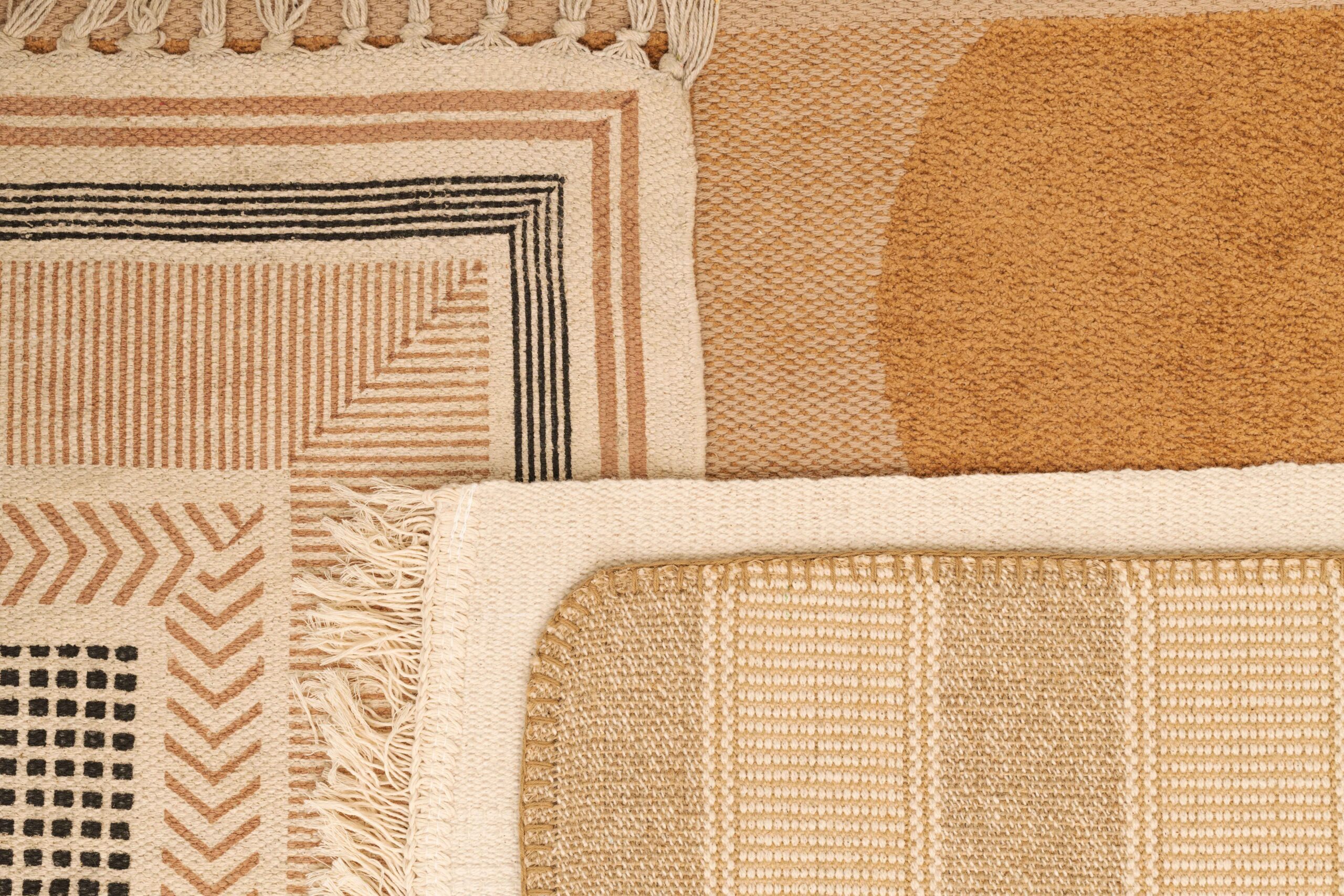
When it comes to creating a stylish, eco-conscious home, natural fibre rugs are a top choice for interior design enthusiasts.
Their earthy textures, neutral tones, and sustainable credentials make them perfect for adding warmth and elegance to any space. Among the many options available, jute and banana fibre rugs stand out as popular picks.
But how do they compare, and which is the better choice for your home? The answer is surprising.
Read on and we’ll dive deep into the differences between jute and banana fibre rugs, exploring their origins, textures, durability, sustainability, and more, to help you make an informed decision.
But first, what are they?
Let’s jump right in:
What Are Jute and Banana Fibre Rugs?
Before we compare, it’s important to understand what these materials are and how they’re made.
Jute Rugs
Jute is a long, soft, and shiny vegetable fibre derived from the Corchorus plant, primarily grown in tropical regions like India, Bangladesh, and China. Known as the “golden fibre” due to its natural sheen, jute is harvested from the plant’s stem, soaked in water to soften, and then spun into yarn for weaving into rugs. Jute rugs are celebrated for their affordability, soft texture, and versatility in home decor.
Banana Fibre Rugs
Banana fibre, also known as banana silk, is extracted from the trunk of the banana plant, a byproduct of fruit harvesting. In Kenya, the trunks are processed by skilled artisans who soften, bleach, and dry the fibres before weaving them into stunning rugs. The result is a luxurious, silk-like material with a subtle sheen and remarkable strength. Banana fibre rugs are not only beautiful but also a testament to sustainable craftsmanship that supports local communities.
Key Characteristics: A Side-by-Side Comparison
To make your decision easier, let’s compare jute and banana fibre rugs across key factors that matter to home decor enthusiasts.
FEATURE
JUTE RUGS
BANANA FIBRE RUGS
Origin
Stems of the Corchorus plant (India, Bangladesh, China)
Trunks of banana plants (Kenya, Nepal, India)
Texture
Soft, slightly coarse, wool-like feel
Silky, smooth, luxurious with a subtle sheen
Durability
Moderate; best for low to medium-traffic areas
Moderate; best for low to medium-traffic areas
Sustainability
Biodegradable, renewable, minimal pesticides
Biodegradable, renewable, uses agricultural waste, supports local communities
Aesthetics
Rustic, earthy, natural brown or beige tones
Elegant, silk-like sheen, versatile for modern and traditional decor
Maintenance
Regular vacuuming, avoid moisture
Easy to clean, vacuum regularly, spot-clean with mild soap
Price
Affordable, widely available
Moderately priced, reflects artisanal craftsmanship
Price
Affordable, widely available
Moderately priced, reflects artisanal craftsmanship
Texture and Comfort
- Jute: Jute rugs are soft underfoot, often compared to wool, making them a cosy choice for bedrooms or living rooms where you might walk barefoot or sit on the floor. However, their texture can be slightly coarse, and some jute rugs may shed fibres, especially in high-traffic areas.
- Banana Fibre: Banana fibre rugs offer a luxurious, silk-like texture that feels smooth and refined. Their soft yet sturdy feel makes them ideal for spaces where comfort and elegance are priorities, such as living rooms or dining areas. Unlike jute, banana fibre rugs are less prone to shedding, providing a smoother experience over time.
Winner: Banana Fibre
Durability and Longevity
- Jute: While jute is durable for low to medium-traffic areas, it’s less resilient than other natural fibres like sisal. Heavy furniture can leave permanent indents, and jute is prone to stretching or fraying if exposed to sharp edges or excessive wear. It’s also highly absorbent, making it susceptible to watermarks and stains.
- Banana Fibre: Banana fibre rugs are remarkably strong due to their cellulose, hemicellulose, and lignin composition. They can withstand medium to high-traffic areas, making them suitable for busy households. Their moisture-absorbing yet durable nature means they hold up well without stretching or fraying, even under furniture.
Winner: Banana Fibre
Sustainability and Environmental Impact
Both jute and banana fibre rugs are eco-friendly, but their sustainability profiles differ slightly:
- Jute: Jute is a renewable resource that grows quickly (4-6 months) with minimal pesticides or fertilisers, reducing its environmental footprint. It’s biodegradable and absorbs carbon dioxide during growth, making it a green choice for eco-conscious homes. However, its cultivation is water-intensive, and processing can involve significant energy use.
- Banana Fibre: Banana fibre is a champion of sustainability. It’s made from the trunks of banana plants, which are typically discarded after fruit harvesting, turning agricultural waste into a valuable resource. At Ziada Solutions, our rugs are handwoven in Kenya, supporting local artisans and reducing reliance on industrial processes. Like jute, banana fibre is biodegradable and requires minimal chemical inputs, but its use of waste materials gives it an edge in circular economy practices.
Winner: Banana Fibre
Aesthetic Appeal
- Jute: Jute rugs bring a rustic, earthy charm to interiors. Their natural brown or beige tones and slightly textured weave suit bohemian, coastal, or Scandinavian decor styles. However, their colour options are limited, as jute doesn’t take dye as vibrantly as other fibres.
- Banana Fibre: Banana fibre rugs exude elegance with their silk-like sheen and smooth texture. Their versatility allows them to complement both modern and traditional decor, from minimalist living rooms to luxurious dining spaces. The subtle sheen adds a touch of sophistication, making them a standout choice for design-savvy homeowners.
Winner: Banana Fibre
Maintenance and Care
- Jute: Jute rugs require regular vacuuming to remove dust and debris, but you should avoid using a beater bar to prevent fibre damage. They’re highly absorbent, so spills must be blotted immediately to avoid stains or watermarks. Jute rugs are not suitable for humid or wet areas like bathrooms or kitchens.
- Banana Fibre: Banana fibre rugs are easy to maintain with regular vacuuming and occasional spot-cleaning using mild soap and water. Their smooth texture makes them less likely to trap dirt, and their durability means they withstand cleaning without fraying. While they absorb moisture, they’re less prone to staining than jute, making them more forgiving in spill-prone areas.
Winner: Banana Fibre
Price and Value
- Jute: Jute rugs are among the most affordable natural fibre rugs, thanks to their widespread availability and relatively simple production process. They’re a budget-friendly option for those looking to add texture without breaking the bank.
- Banana Fibre: Banana fibre rugs are moderately priced, reflecting the artisanal craftsmanship involved. At Ziada Solutions, our rugs are handwoven by Kenyan artisans, ensuring fair wages and high-quality production. While slightly more expensive than jute, banana fibre rugs offer superior durability and aesthetic appeal, providing excellent value for money.
Winner: Tie (Jute Rugs are more affordable but Banana Fibre provides more long term value)
Where to Use Each Rug in Your Home
Choosing the right rug isn’t just a case of comparing sustainable fibres. It also depends on the space and its function.
Jute Rugs: Best For
- Bedrooms: Their soft texture is perfect for low-traffic areas where comfort is key.
- Living Rooms: Ideal for cosy spaces where you want a relaxed, rustic vibe.
- Layering: Jute rugs work well as a base for layering with smaller, patterned rugs.
Banana Fibre Rugs: Best For
- Living Rooms: Their elegant sheen and durability make them perfect for high-traffic living spaces.
- Dining Rooms: The smooth texture and stain resistance suit areas prone to spills.
- Entryways: Their strength and style make them ideal for welcoming guests with sophistication.
Why Choose Banana Fibre Rugs?
At Ziada Solutions, we believe banana fibre rugs are the ultimate choice for eco-conscious homeowners who value style, durability, and social impact. Here’s why our rugs stand out:
- Sustainable Craftsmanship: Our rugs are made from banana plant trunks, a byproduct of fruit harvesting, ensuring zero waste. This aligns with our commitment to a circular economy and environmental stewardship.
- Artisanal Quality: Handwoven by skilled Kenyan artisans, primarily women, our rugs reflect exceptional craftsmanship and empower local communities through fair wages and sustainable livelihoods.
- Luxurious Appeal: The silk-like texture and subtle sheen of banana fibre elevate any space, offering a perfect blend of elegance and practicality.
- Versatility: Whether you’re styling a modern minimalist home or a traditional Kenyan-inspired interior, our rugs complement a wide range of decor styles.
- Durability: Designed to withstand daily wear, our banana fibre rugs are perfect for busy households, offering longevity without sacrificing beauty.
Why choose Ziada’s banana fibre rugs?
- Made from sustainable, waste-derived materials
- Handwoven by Kenyan artisans
- Luxurious, silk-like texture
- Durable for high-traffic areas
- Supports local communities
Caring for Your Natural Fibre Rug
Both jute and banana fibre rugs require proper care to maintain their beauty and longevity. Here are some tips to keep your rug looking its best:
- Vacuum Regularly: Use a vacuum without a beater bar to remove dust and debris. Vacuum in multiple directions for a thorough clean.
- Blot Spills Immediately: For both rugs, blot spills with a clean cloth and mild soap. Avoid soaking the rug, as natural fibres are absorbent.
- Use a Rug Pad: A rug pad prevents slipping and reduces wear, especially for jute rugs in high-traffic areas.
- Rotate Periodically: Rotate your rug every few months to ensure even wear and prevent fading from sunlight.
- Avoid Moisture: Keep both rugs away from damp areas, as moisture can cause stains or stretching.
The Verdict
While jute rugs are a fantastic budget-friendly option for adding rustic charm to low-traffic areas, banana fibre rugs offer unmatched elegance, durability, and sustainability. Their silk-like texture, superior strength, and eco-friendly production process make them the ideal choice for homeowners who want to combine style with substance. By choosing our banana fibre rugs, you’re not only enhancing your home but also supporting Kenyan artisans and sustainable practices.
Whether you’re drawn to their luxurious feel or their ethical production, our rugs are designed to bring beauty and sustainability to every room.